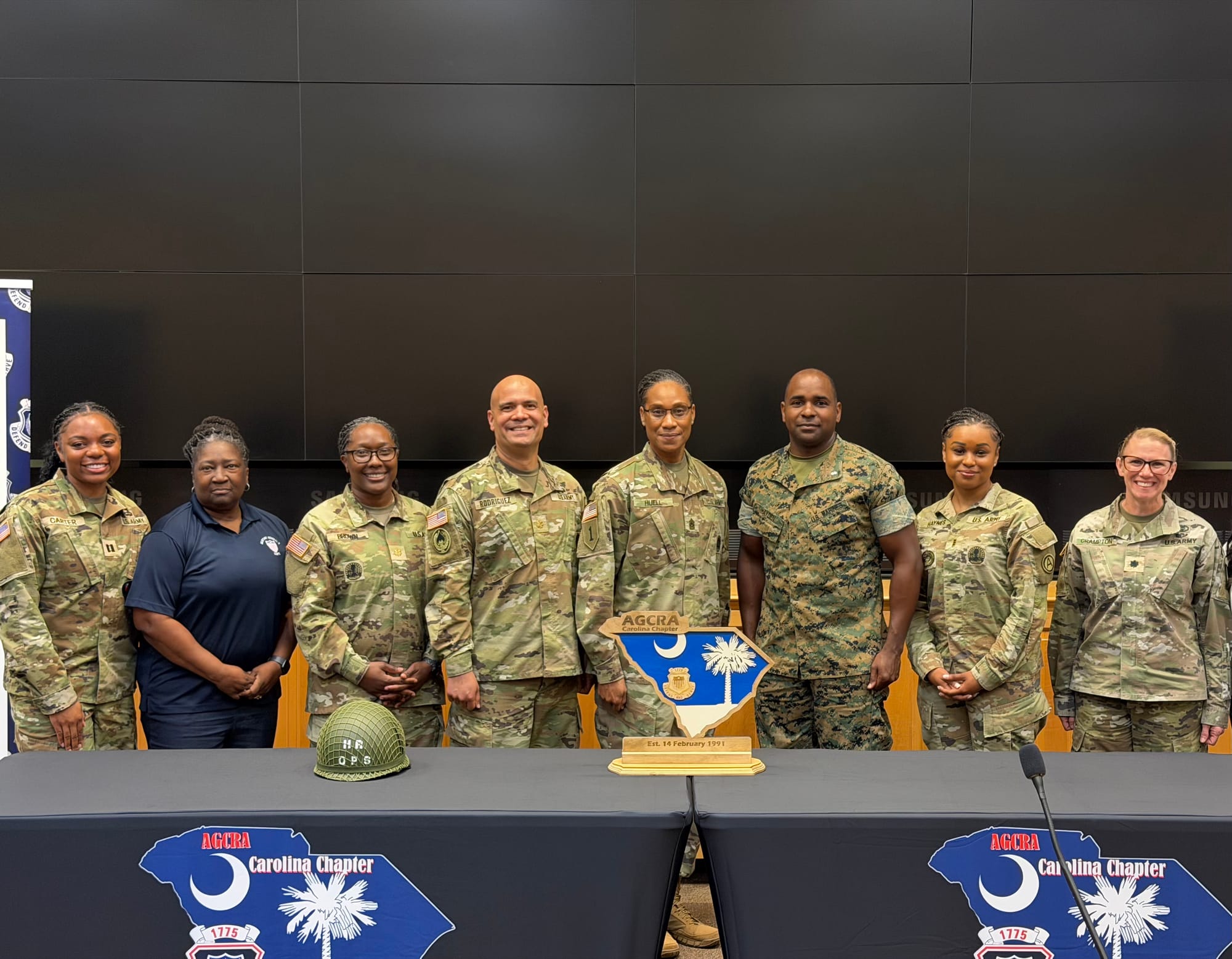
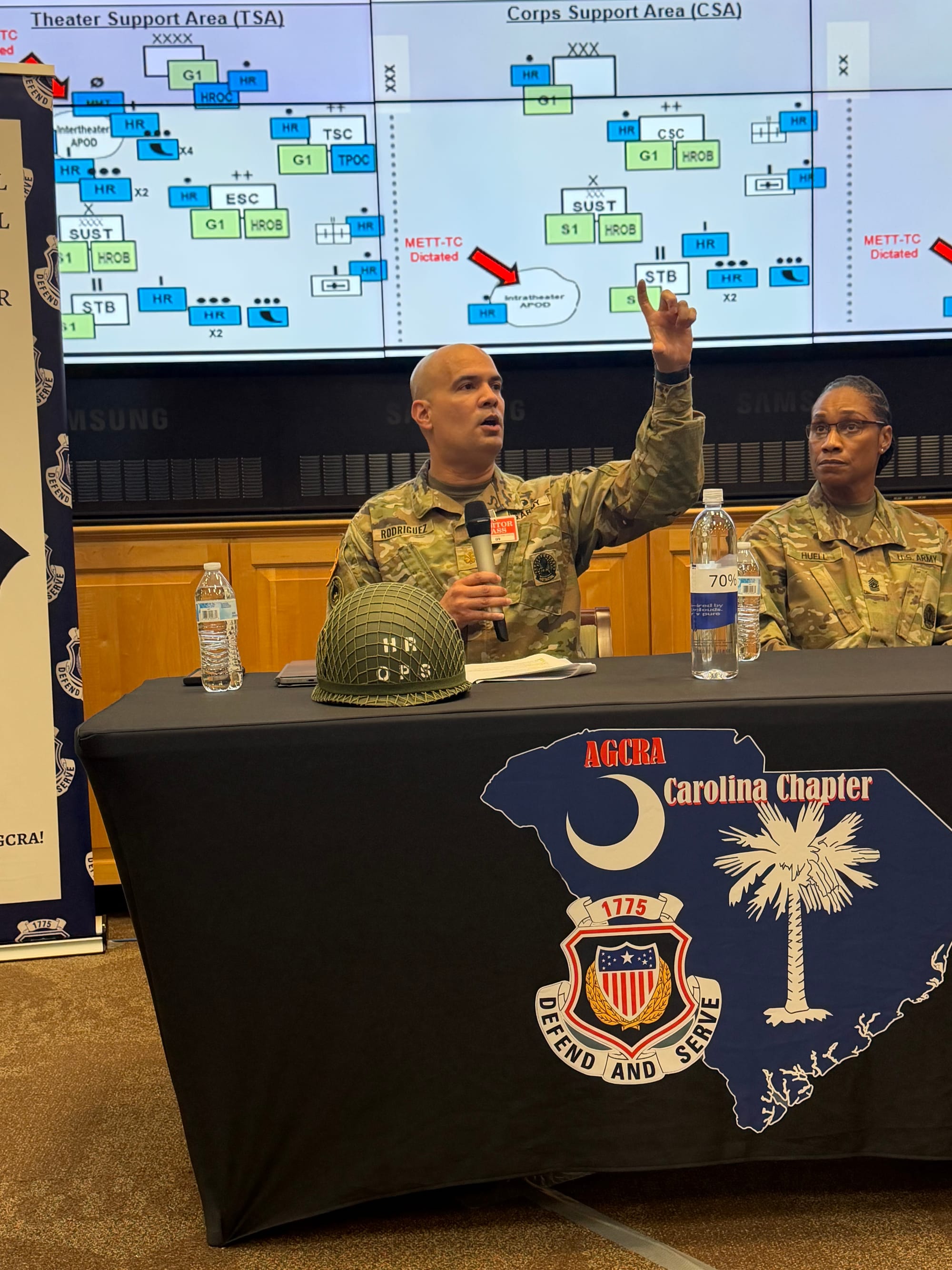
“I keep this helmet with me to remember that I’m still a part of the fight. We can’t stay behind our desks and win—we have to support and understand operations.”
Those remarks from MAJ Gamaliel Rodriguez, Team Lead and Transformation and Lessons Learned Manager–Theater Sustainment Command (TLLM-TSC), set the tone for a thought-provoking Leading in Large-Scale Combat Operations (LSCO) professional development session hosted by the Carolina Chapter on 19 May 2026.
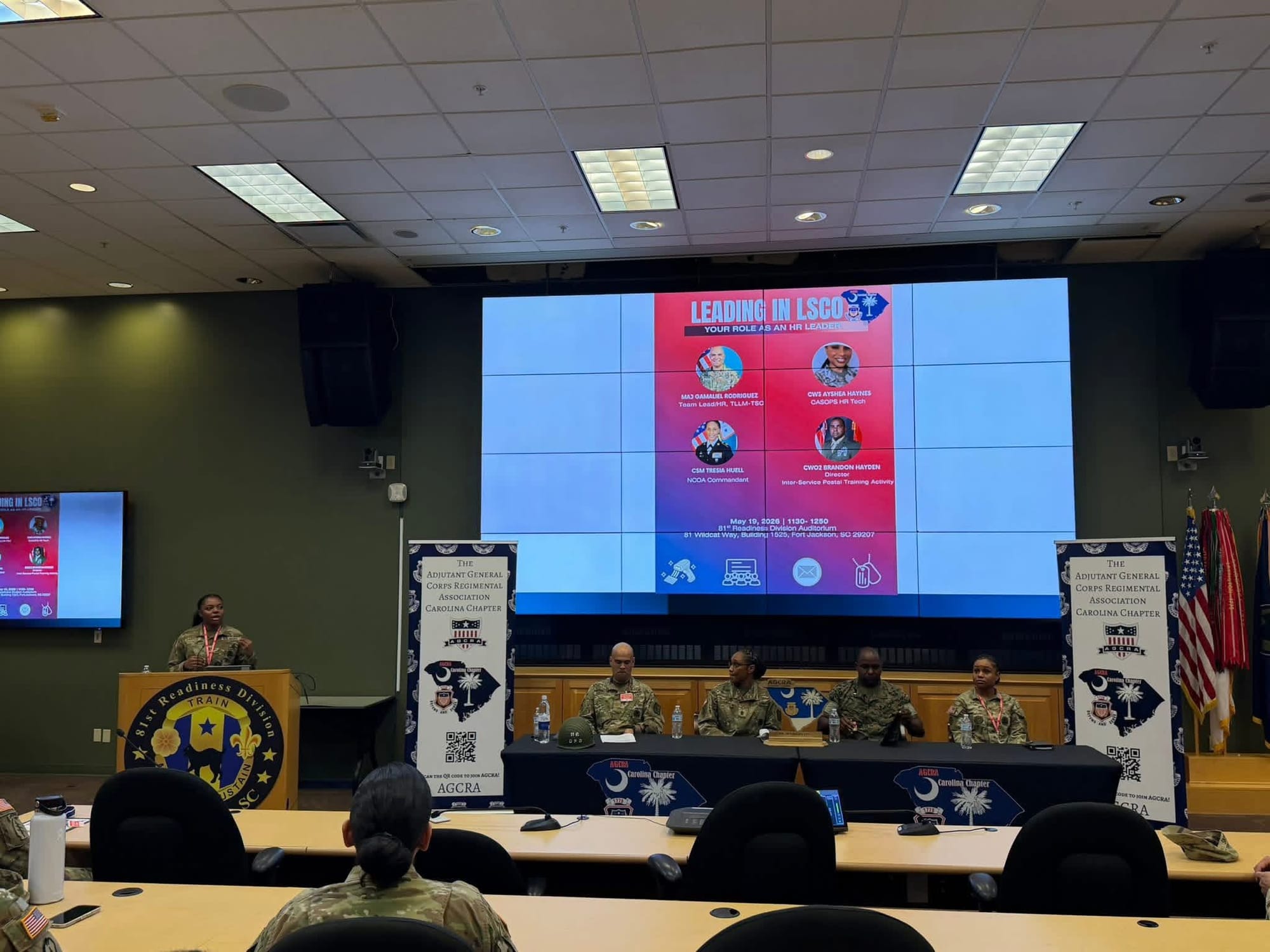
The event brought together military leaders from across the force to discuss operational readiness, sustainment challenges, and preparing for future conflict. Panelists included MAJ Rodriguez; CW3 Shay Hayden, ARCENT CASOPS HR Technician; CSM Tresia Huell, NCOA Commandant; and CWO2 Braden Hayden, Director of the Inter-Service Postal Training Activity at Fort Jackson, South Carolina.
The discussion focused on the realities of large-scale combat operations and the importance of developing an operational mindset across all warfighting and support functions. Panelists emphasized that success in future conflicts will require leaders to understand not only administrative processes, but also how those processes directly enable operational readiness and mission accomplishment.
A significant portion of the discussion addressed postal operations and the challenges they face in today’s global environment. Leaders highlighted the impact of transportation constraints, security concerns, infrastructure limitations, and increased operational demands on the delivery of postal support. More than simply moving mail, postal operations contribute directly to morale, accountability, and communication for deployed personnel, making them a critical component of sustainment during contested operations.
The panel also explored opportunities to strengthen Professional Military Education (PME) by incorporating more operationally focused training. One key recommendation was increased integration of the Medical Planner’s Toolkit to enhance casualty operations planning, medical evacuation coordination, and personnel accountability. Panelists noted that understanding casualty management procedures and sustainment processes will become increasingly important in future conflicts where casualty rates and operational complexity may exceed historical norms.
Overall, the session reinforced the importance of preparing military professionals for the realities of large-scale combat operations. Through candid discussion and practical insights, the panel challenged attendees to think beyond traditional administrative functions and better understand how their roles contribute to sustaining the fight in future operational environments. The Carolina Chapter remains committed to providing professional development opportunities that enhance readiness, foster dialogue, and prepare Army professionals for the challenges of tomorrow’s battlefield.